
If you're considering designing a new website or revisiting the content of your existing site, this article is for you. Before diving into writing, it's essential to answer a key question: who is your website for, and what are its goals for those who will use it?
This step is often overlooked because we're eager to get to the 'visual' part of the project. Yet, everything stems from this step. A website without clear objectives is like going on a trip without a destination: you might arrive somewhere, but not necessarily at the right place, or worse, you arrive at the right place after taking several detours!
In this section, we guide you through two essential reflections: clarifying what you want to achieve with your site and gaining a better understanding of the people for whom you're creating it. Because a good website is primarily a bridge between your business goals and the real needs of your users.
Clarify your business objectives
Before even thinking about your site's structure or content, ask yourself this very simple question: why does this site exist?
This question seems obvious, but the answer is often vaguer than we think. "Having an online presence" is not an objective; it's a starting point. An objective is what you want your site to concretely accomplish, both for you and for the people who visit it.
Your objectives could include, for example:
- Generate qualified leads for your business
- Sell your products or services online
- Establish your credibility and expertise in your field
- Inform and educate your community
- Showcase your initiatives or projects
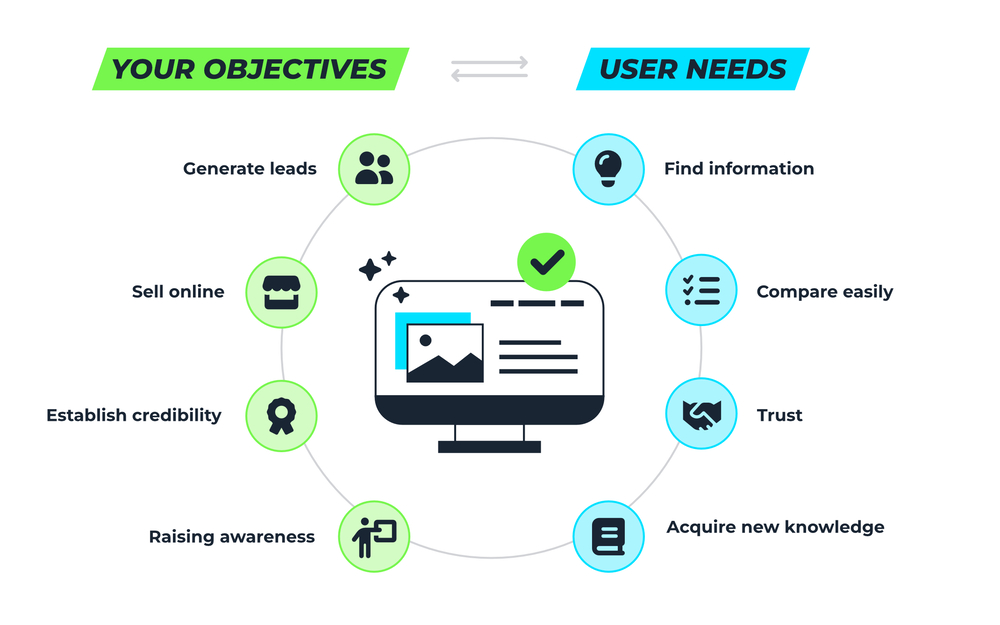
The same site can aim for multiple objectives at once. But it is important to identify a main one, the one that will guide all your content and structure decisions.
Why? Because each objective calls for a different approach. If you want to generate leads, you will place calls to action and contact forms at key moments in your visitors' journey. If you are looking to educate your community, focus on blog articles, practical guides, or downloadable resources. If your priority is to establish your credibility, you will highlight your achievements, client testimonials, and expertise.
One last piece of advice: think about your objectives from your users' perspective, not just your own. An effective website isn't just the one that meets your business needs; it's also the one that meets the needs of the people who visit it. When these two realities align, that's when the real magic happens.
Define your ideal client profile
We suggest using the 'ideal client profile' approach rather than traditional personas. Why? This more comprehensive method avoids creating restrictive stereotypes and allows us to think about inclusion from the start. Rather than artificially segmenting your audience, this approach recognizes the real diversity of your customers and the fluidity of their needs.
Traditional personas create very detailed fictional characters: 'Marie, 42 years old, mother of two, works as a project manager, earns $75,000 per year, loves yoga and Netflix.' They are given a name, a photo, and sometimes even invented quotes. The problem is that this approach can create restrictive stereotypes and cause you to overlook real clients who don't perfectly match your persona.
The ideal customer profile takes a broader, more inclusive view. Instead of creating a fictional character, you describe the characteristics, needs, and context of a group of real people. It's a more flexible approach that recognizes the natural diversity of your clientele.
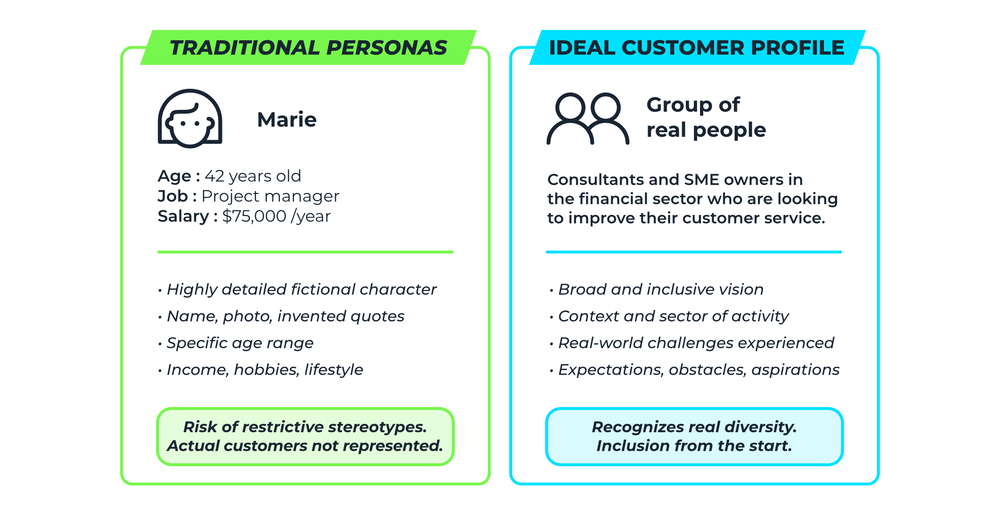
Your ideal client profile is not limited to demographic characteristics. It includes a more human perspective that takes into account:
- The types of companies or organizations, their size, and their industry sector
- The people you are addressing within these organizations
- Their understanding of your services, as well as their preconceived ideas (good or bad) about your products or services
- The real issues they face (what keeps them awake at night!) and the obstacles they encounter daily
- Their expectations and aspirations, the results they are desperately seeking
Download our complete template to create your ideal client profile. This document contains all the questions to consider, as well as a template to fill out to define a precise and actionable portrait of your ideal clientele.
Next step: Audit of the current site and competitor analysis
Defining your objectives and understanding your audience are the foundations upon which everything else will be built. It's an exercise that requires perspective and honesty, but it will save you many detours (and many regrets!) once the project is launched.
Take the time to think about it seriously. Involve the right people within your organization. And don't hesitate to question what you already believe you know about your clients. You might be surprised by what this reflection reveals.
Once your goals are clarified and your ideal client profile is defined, you're ready to move on to the next step: examining what already exists in both your own offerings and those of your competitors. Before building or renovating, you first need to tour the property and then inspect it.
In the next article, we will guide you through auditing your current website and competitor analysis. Both exercises are essential for making informed decisions and creating a website that truly stands out.